
You’re driving from one client meeting to another. You stop for gas. Then you grab a coffee. While you’re out, you swing by the dry cleaner to pick up your shirts—it’s right there, might as well.
When you get home, you open your mileage log. Now what?
Which of those miles are deductible? All of them? Some of them? Do you need to subtract the dry cleaner detour? What if you took a longer route because you knew there was a good coffee shop on the way?
These are the gray areas nobody talks about. The IRS gives clear rules for pure business trips. But real life isn’t pure. Real life is messy.
Here’s how to handle it.
The Gas Station During a Business Trip
Let’s start with an easy one.
You’re driving 60 miles to meet a client. Twenty miles in, you stop for gas. You fill up, then continue to your meeting.
Is the gas station stop deductible?
Yes. The entire trip is still deductible.
Stopping for gas doesn’t change your trip from business to personal. It’s an incidental stop necessary for completing the business trip. You can’t get to the client without fuel.
Same goes for:
- Using a restroom
- Grabbing food through a drive-through (eating in your car, continuing to your destination)
- Stopping because of road construction or traffic
These are minor interruptions, not personal side trips. Your trip’s primary purpose is still business. You’re still going from Point A (your office or home office) to Point B (your client).
Don’t subtract the extra quarter-mile into the gas station. Don’t reduce your mileage because you took 5 minutes at a rest stop. Just log the full trip.
The Coffee Stop Between Clients
Now it gets slightly more interesting.
You finish a meeting with Client A. Your next meeting with Client B is in an hour. You’re 30 miles away from Client B. Instead of driving straight there and waiting in your car, you stop at a coffee shop halfway, work for 20 minutes, then continue.
Is the entire distance from Client A to Client B still deductible?
Yes—as long as the coffee shop isn’t a major detour.
You’re traveling between two business locations. A reasonable stop along the way doesn’t break the business purpose. You’re essentially in transit, just taking a break.
The key word is reasonable. If the coffee shop is right off your route (or close to it), you’re fine. You don’t need to subtract the extra 0.3 miles into the parking lot.
But what if your favorite coffee shop is 10 miles off your route? Now you’re making a personal choice that significantly extends your travel. We’ll get to that.
Personal Errands “On the Way”
Here’s where the gray gets darker.
Same scenario: You’re driving from Client A to Client B. But instead of a quick coffee stop, you detour 5 miles to pick up your kid from school. Then you continue to Client B.
Now what’s deductible?
This is a personal errand, not an incidental stop. You have to account for it.
According to IRS Publication 463: Only the business portion of the trip is deductible. Personal miles are not.
There are two ways to handle this:
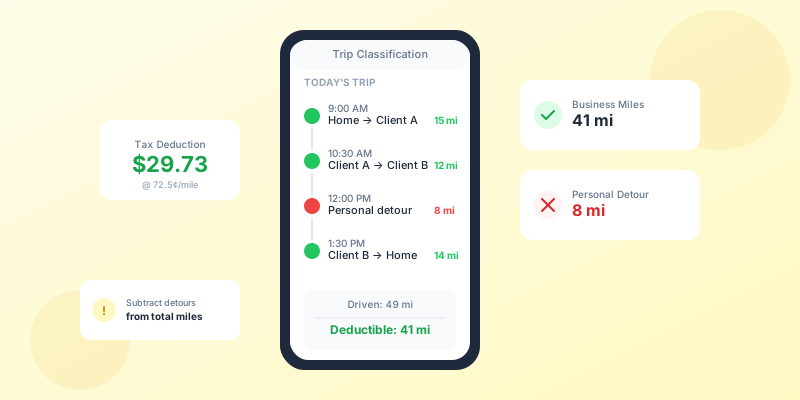
Method 1: Subtract the personal detour
Calculate what the direct route would have been (Client A to Client B = 30 miles). Calculate your actual route with the school pickup (Client A to School to Client B = 40 miles). The difference (10 miles) is personal.
Deductible miles: 30
Method 2: Split the trip
Log two separate trips:
- Client A to School: Personal (not deductible)
- School to Client B: Business (deductible)
The result is similar. You’re not getting credit for the personal detour.
Most people use Method 1 because it’s simpler. Just figure out what your direct business route would have been and deduct that distance.
Taking a Different Route
This one trips people up.
Your direct route from home to a client is 20 miles via the highway. But you hate highway driving, so you take back roads—25 miles.
Can you deduct 25 miles?
Technically, the IRS could argue you should only deduct the direct route (20 miles). But in practice, they rarely care about minor route variations.
Reasonable route choices are generally fine:
- Avoiding traffic congestion
- Preferring a safer road
- Taking a route with better parking at the destination
- Personal comfort (hating highway driving)
What’s not fine: Taking a 40-mile scenic route when the direct route is 20 miles. That’s doubling your deductible miles for personal enjoyment.
The common-sense test: Would a reasonable businessperson take this route? If yes, it’s probably fine. If you’re clearly padding miles, you’re taking a risk.
Combining Business and Personal in One Trip
Now let’s tackle the real-world scenario: The combo trip.
You have a client meeting downtown (business). On the same trip, you plan to have lunch with a friend (personal) and pick up a prescription (personal). All three stops are in the same area. You drive downtown once, do all three things, then drive home.
How much is deductible?
This depends on the primary purpose test.
The Primary Purpose Test
Per IRS Publication 463, the IRS asks: What was the primary purpose of the trip?
If the primary purpose was business, and the personal activities were secondary or incidental, the travel to and from the area may be fully deductible. You’d only need to subtract any additional miles caused by the personal stops.
If the primary purpose was personal, the trip isn’t deductible—even if you happened to do some business while there.
Primary purpose isn’t just about time spent. It considers:
- What was planned first?
- What was the main reason for going to that location?
- Would you have made the trip if the business meeting didn’t exist?
Example 1: You scheduled the client meeting last week. This morning you realized you need a prescription, and since you’ll be downtown anyway, you’ll grab lunch with a friend. The meeting is the reason for the trip. Personal activities are tacked on.
Primary purpose: Business. Deduct the round-trip miles, minus any extra miles for the personal stops.
Example 2: You planned a downtown lunch with a friend. Then you realized you have a client nearby and decide to pop in for a quick meeting.
Primary purpose: Personal. The trip isn’t deductible. (You could potentially deduct miles driven between the lunch spot and the client’s office, but not the miles to/from downtown.)
When to Split a Trip vs. Count the Whole Thing
Let’s make this practical.
Count the whole trip when:
- The trip is primarily for business
- Personal activities are brief, incidental, or along the route
- Personal detours don’t significantly extend your mileage
- You would have made the trip regardless of the personal activities
Split the trip when:
- There’s a significant personal detour (more than a mile or two out of your way)
- Personal activities are the main reason for going to that area
- Business was an afterthought added to a personal trip
Example scenarios:
| Scenario | Treatment |
|---|---|
| Client meeting, then grab coffee on the way back | Count whole trip |
| Client meeting, personal detour 8 miles to pick up kid, then home | Subtract the personal detour |
| Visit family across town, stop by client’s office on the way | Split—only client-related portion deductible |
| Business trip with gas station stop | Count whole trip |
| Drive to mall for shopping, also visit client in same plaza | Split—business portion only |
| Three client meetings with lunch break between #2 and #3 | Count whole trip |
The “De Minimis” Principle
Here’s a term you might not know: de minimis.
It’s Latin for “about minimal things.” While the IRS doesn’t use this exact term for mileage stops, tax professionals widely apply the principle: tiny, incidental deviations from a business trip don’t need to be accounted for separately.
If you’re traveling 50 miles for business and you pull into a Starbucks drive-through that adds 0.2 miles, nobody’s going to audit you for those 0.2 miles. It’s de minimis—too small to matter.
This gives you some practical flexibility:
- Gas stations: Don’t subtract
- Restrooms: Don’t subtract
- Drive-through food/coffee: Don’t subtract
- Brief stops along your route: Don’t subtract
But there’s a limit. A 5-mile detour for your dry cleaning isn’t de minimis. A stop at the grocery store on your way home from a client meeting isn’t de minimis.
Use common sense. If the stop takes you significantly out of your way or is clearly personal, account for it.
Documentation for Mixed Trips
Here’s where people mess up. They have great records for pure business trips, but they ignore mixed trips—either skipping them entirely or logging them improperly.
For mixed trips, your mileage log should include:
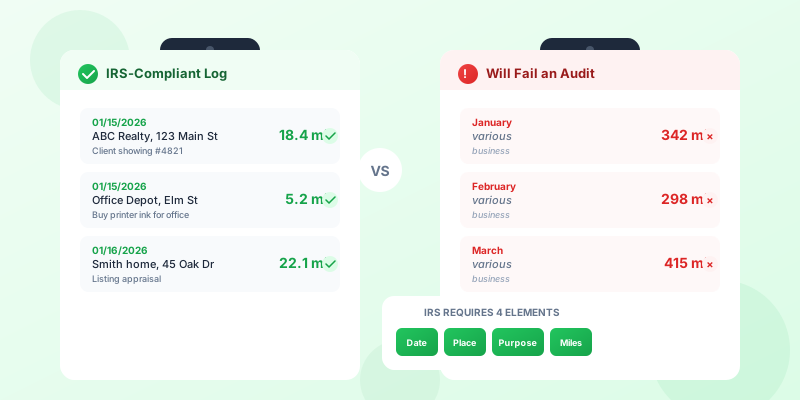
1. The business purpose Just like any other trip. “Client meeting with ABC Corp.”
2. The actual route If you made personal stops, note them. “Via downtown pickup.”
3. The business mileage claimed Either the direct route distance, or your total minus the personal detour.
4. How you calculated it A note explaining your math. “Direct route 32 miles; actual 40 miles due to school pickup; claiming 32.”
If you’re using an automatic mileage tracking app, it captures your actual route. You then classify the trip and can add notes. For mixed trips, the note is where you explain what portion is business.
The goal: If the IRS ever asks, you can show exactly how you calculated your deduction. Transparency protects you.
The Road Trip Problem
Business trips that span multiple days create their own gray areas.
You fly to a conference in another city. The conference runs Monday through Wednesday. You decide to stay the weekend beforehand and do some sightseeing.
What’s deductible?
Per IRS rules, travel expenses (including mileage or airfare) are deductible if the trip is “primarily for business.” If your trip was primarily for business but you extended your stay for vacation or made personal side trips, you can deduct only your business-related travel expenses.
For multi-day trips, count the business days vs. personal days. If you spend more days on business than personal activities, the primary purpose is business—and your travel costs to and from the destination are generally deductible.
But personal days don’t generate deductible expenses. If you rent a car and drive around sightseeing on Saturday, those miles aren’t deductible.
For a typical business trip:
- Travel to/from the destination: Deductible (if trip is primarily business)
- Miles during business activities: Deductible
- Miles during personal activities: Not deductible
Keep your log updated each day. Don’t try to reconstruct what you did a week later.
Quick Reference: Gray Area Scenarios
| Situation | Deductible? | Notes |
|---|---|---|
| Gas stop on a business trip | Yes | Incidental, don’t subtract |
| Coffee shop along your route | Yes | Minor stop, don’t subtract |
| Dry cleaning 5 miles out of way | Partial | Subtract the personal detour |
| Scenic route (10 extra miles) | Partial | Deduct direct route distance |
| Picking up kid mid-trip | Partial | Subtract personal miles |
| Lunch with friend on business trip | Depends | If secondary to business purpose, OK |
| Shopping trip with quick client stop | Partial | Only business portion |
| Business conference + weekend fun | Partial | Travel maybe; personal days no |
The Mindset to Adopt
Here’s how to think about it:
Would you have driven these miles anyway for business?
If yes, they’re deductible.
If you drove extra miles only for personal reasons, those extra miles aren’t deductible.
A 60-mile round trip to a client is deductible. The fact that you stopped for gas doesn’t change that. The fact that you used a restroom doesn’t change that.
But if you went 10 miles out of your way to drop off a package at your aunt’s house, those 10 miles are personal.
Simple as that.
What to Do
1. Log every trip, even the messy ones. Skipping a trip because it’s “complicated” means leaving money on the table. Log it and figure out the business portion.
2. Note the primary purpose immediately. Don’t wait until tax time to remember why you took a trip. Document it the same day.
3. Use direct-route distance for mixed trips. When personal detours are involved, use what the trip would have been without the personal stop.
4. Keep notes on your method. If you calculated something, explain how. “Direct route 25 miles, claimed 25 even though actual was 28 due to personal errand.”
5. Be consistent. Pick a method for handling mixed trips and stick with it all year. Inconsistency looks suspicious.
The Bottom Line
Real life doesn’t come in neat categories. You’ll have trips that are part business, part personal, and part “I’m not really sure.”
The IRS knows this. They’re not expecting you to document every 0.1-mile deviation from your route.
What they are expecting: That you make a reasonable effort to separate business from personal, that you claim only the business portion, and that you can explain your method if asked.
Stop for gas? Don’t sweat it. Grab coffee along the way? You’re fine. Five-mile detour for dry cleaning? Subtract it. Shopping trip with a client meeting tacked on? Split it properly.
Track your trips with an automatic mileage tracking app, add notes on mixed trips, and be honest about what’s business and what’s not.
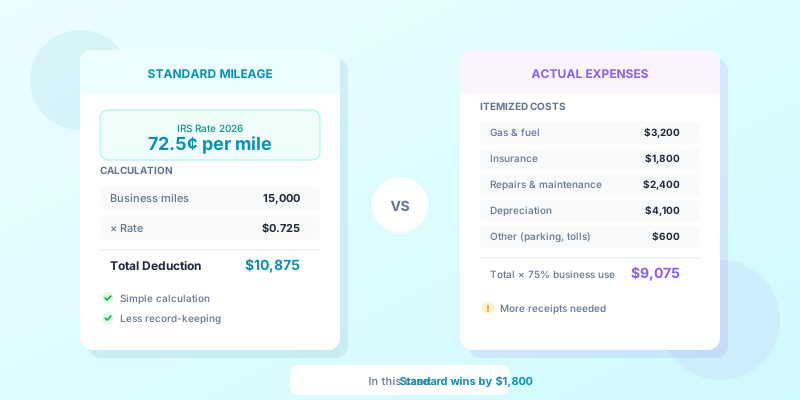
If you’re ever unsure whether a trip is deductible—or whether you should use the standard mileage rate or actual expenses—you can run the numbers with our mileage deduction calculator.
The gray areas aren’t that scary once you understand the rules. Most of the time, the answer is common sense.
Disclaimer: This article is for informational purposes only and does not constitute tax, legal, or financial advice. Tax rules vary by situation, and IRS interpretations can change. Consult a qualified tax professional for advice specific to your circumstances.